
Bitumen · Trade execution · 8 min read
Yesterday’s Price, the First Shipment
Prices moved day by day, while contracts and payments took longer. The first cargo to move was a verified portion of the volume, not the entire plan.
Before reading the record
- Region
- Middle Eastern supply origins and Asian markets
- Work
- Coordination of bitumen prices, volumes, payment, inspection and shipment
- Role
- Historical transaction-execution experience of PentaBay's management
- Outcome established
- An available portion of the volume shipped under a separate contract
- Record scope
- Anonymized site photographs and confidential trade and shipping records
- Current relevance
- Does not establish current pricing or supply availability
Supporting records
- Price offers and contract and payment coordination records from the period
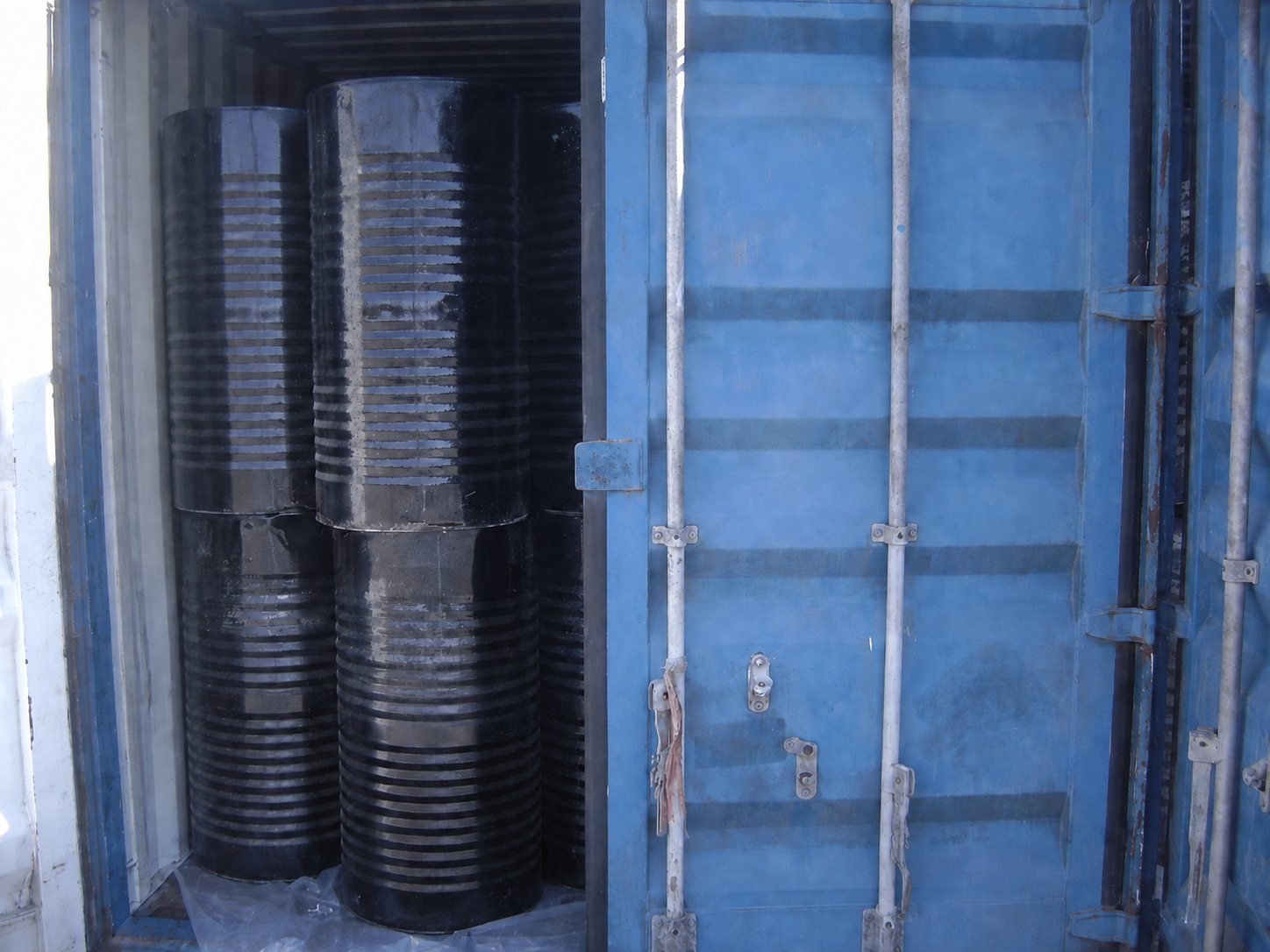
- Site photographs showing drum packaging, third-party inspection and container loading
- Confidential records connecting product, packaging, weight and shipment information
What the records establish
- Historical experience of PentaBay's management taking a portion of bitumen volume through contracting, inspection, packaging and shipment
- Practical experience of having to manage quote validity alongside bank and document processing times
What they do not establish
- Current supply rights, inventory, pricing or relationships with a particular country or company
- That the entire volume originally planned was shipped
- Guidance on current sanctions, banking or legal requirements, or an invitation to transact
01 / THE MARKET CLOCK
There was a price quote, but little time to act on it.
A supplier's morning price was passed to a prospective buyer, followed by an explanation of the terms and a wait for a response. By the time contact resumed with the supplier, a figure valid only shortly before had sometimes changed. Formal offers also carried short validity periods and repricing conditions.
At first, this seemed like negotiating pressure. As it happened repeatedly, the lesson became clear: a commodity price matters not only for its amount, but for how long it remains valid. A price without a reference date and validity period was difficult to use in a decision.
After that, each price was shared with its basis, included costs, validity period and conditions for securing volume. The task was no longer to pass on a number alone, but to communicate the conditions under which that number applied.
02 / TWO CLOCKS
The market and the banks moved at different speeds.
One clock belonged to a market moving day by day. The other belonged to reviewing contracts, arranging payment instruments and waiting for the bank. The seller wanted a quick decision; the buyer wanted secure terms.
Signing did not automatically secure volume. A quantity the seller said was available was different from an actual allocation. While payment arrangements were delayed, another buyer could decide first and change the remaining availability.
Speed was necessary, but haste was not. The counterparty, fund flows, the bank's ability to process payment and the financial sanctions tightening at the time all needed review. Stopping when an answer was unclear was part of the transaction process.
In commodity trading, time was not just a box on a schedule. It was a cost that changed both price and available volume.
03 / FIRST MOVEMENT
The first cargo was a verified portion of the volume, not the whole plan.
After prolonged coordination, a portion that could be secured first was handled under a separate contract. The entire planned volume was not contracted at once and shipped in installments. Only the portion actually ready was separated out for execution.
The product was packed into drums, inspected by a third party and loaded into a container. Before the doors closed, the drum count and condition were checked, and figures in site records were reconciled with shipping documents. The cargo that passed those steps left the port.
Seeing the figures from the documents become stacks of actual drums brought more relief than celebration. That first movement came only after repeated price updates, revised terms, and several changes to payment and shipping schedules.
04 / QUESTIONS THAT REMAIN
The first shipment left four questions to ask.
After that experience, a statement that volume was available no longer led straight to a price question. Four questions were asked together: how long was the price valid, could the volume actually be allocated, was payment lawful and processable by a financial institution, and could packaging, inspection and transport be managed through to the destination?
These questions were not procedures intended to slow the trade. They were the minimum checks needed to keep track of the market, paperwork, banks and cargo moving at different speeds.
Price
What are the reference date, validity period and included costs?
Allocation
Is the quantity merely described as available, or actually allocated?
Payment
Can the payment route pass banking and compliance review?
Delivery
Can packaging, inspection, documents and transport be coordinated through to the destination?
What the work taught us
A price was more than a single number, and a statement of availability was not a supply commitment.
The first shipment established a clear principle: contracting, payment, inspection and shipment must be consistent in the supporting evidence before a transaction proceeds.