
Bitumen · Inspection · Logistics · 9 min read
The Weight of a Drum
After securing the product, the work involved more than packaging. The weight of each drum had to remain consistent across packing lists, inspection records and transport documents.
Before reading the record
- Region
- Middle Eastern origins and Asian destinations
- Work
- Drum filling, weighing, inspection, container loading and document reconciliation
- Records
- Anonymized site photographs and packaging, inspection and transport records
- Key output
- Reconciliation of quantity, net weight and gross weight by container
- Photograph scope
- Selected from several historical transactions, not a continuous sequence from one shipment
- Current relevance
- Does not replace current product specifications or inspection criteria
Supporting records
- Site photographs of new steel drums being prepared, filled, individually weighed and inspected
- Packing records connecting drum counts, net and gross weights and seal information by container
- Independent inspection records covering product, drums, containers and internal securing arrangements
- Transport records connecting product descriptions, packaging, weight and completed shipment information
What the records establish
- That PentaBay's management has field experience of dispatch, inspection and document reconciliation for drum-packed bitumen
- That practical records exist of reconciling quantities and weights across documents at container level
What they do not establish
- That all published photographs and records were produced during one shipment
- That the facilities, products or workers shown have a current relationship with PentaBay
- Any guarantee of quality, volume, price or inspection results for a current transaction
01 / FILLING
Quality in repetitive work began with applying the same standard every time.
The site photographs show drums lined up beneath pipework and filled with hot product. What looks simple in a photograph required continuous checks of container condition, fill quantity and working safety.
A small discrepancy in one drum, repeated across many drums, becomes a difference in the entire shipment. Deformation, seams and lid security on new steel drums were therefore checked separately from product quality. Packaging formed part of the trade terms that protected the product to its destination.

02 / WEIGHING
A small difference per drum can become a large difference across the cargo.
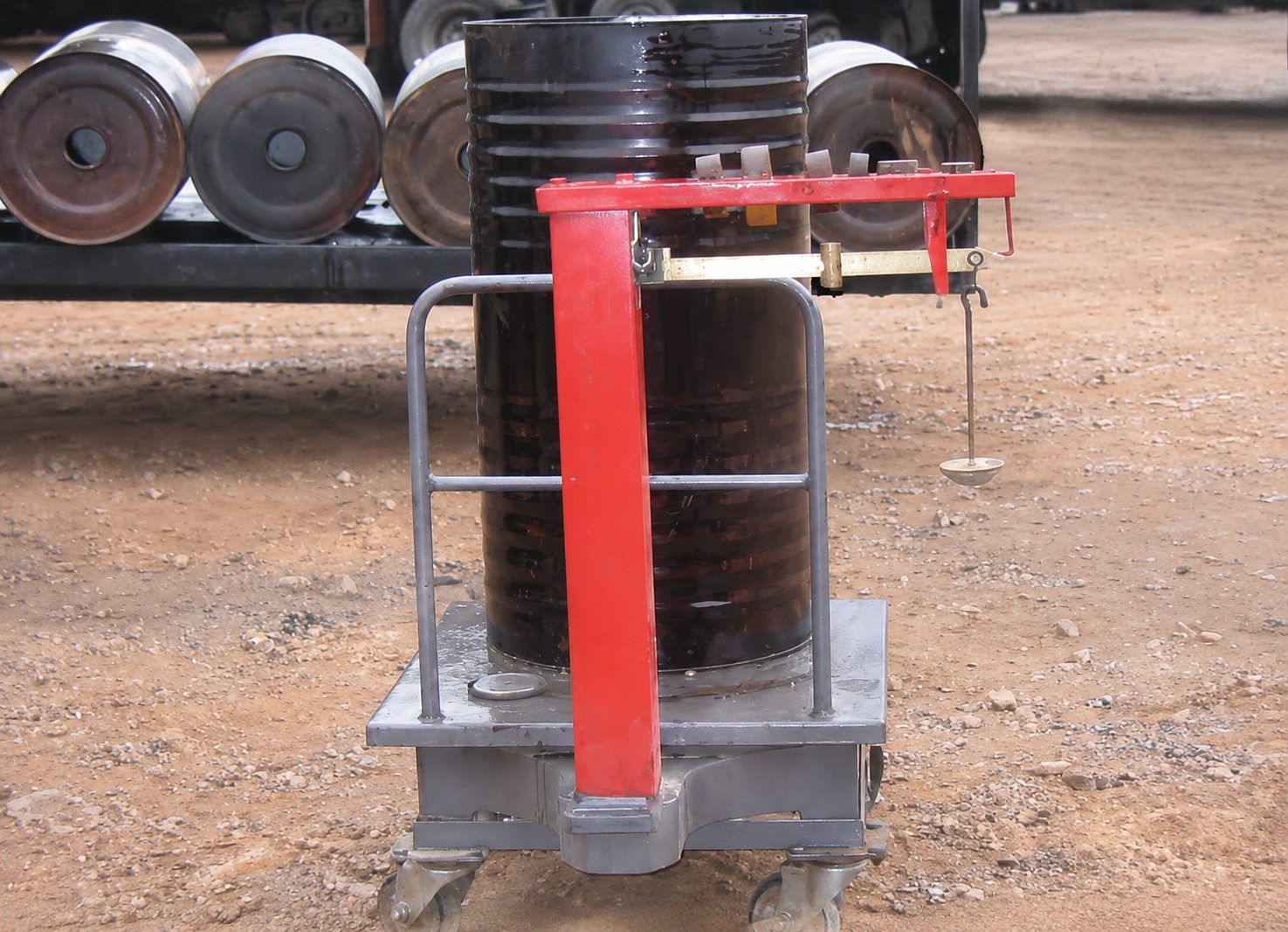
The figure checked when a drum was placed on the scale did not stay at the site. Product net weight, gross weight including the drum, and empty-container weight had to be recorded separately. As drum numbers increased, unit discrepancies accumulated across the cargo.
Packing lists recorded drum counts and weights by container, with the same figures carried into inspection and transport records. Any difference between site measurements and document figures had to be explained and corrected.
From then on, the first question concerned the unit and measurement process behind a number, not just the total. Reliability depended on being able to trace how the figure was produced, not on how many digits it contained.
03 / THIRD-PARTY VIEW
Inspection turned site facts into records a distant buyer could assess.
A seller's statement that everything is in order differs from verification by an independent inspection body. Inspection covered more than counting units. It also checked whether the product met agreed specifications, drums and containers were in good condition, and loaded quantities and weights matched the documents.
A distant buyer cannot visit every time. Consistency among inspection records, photographs and packing lists stands in for a site visit. Third-party verification was not a stamp that automatically guaranteed trust. It recorded who checked what, and against which criteria.

04 / DOCUMENT CHAIN
Departure brought the product, packaging, inspection and paperwork together.
After the drums were loaded, their arrangement and internal securing were checked to reduce movement and impact during transport. Once the doors closed, the interior was no longer visible, making origin-site records more important.
Completed shipment details were then reflected in transport documents. Product descriptions, packaging, quantities, weights, origin and destination were reconciled against packing lists and inspection records. Sometimes the cargo was ready while documents lagged; sometimes the documents were complete while site work remained unfinished.
An international transaction was not completed by one large contract. It required an unbroken connection from the small figures measured at a single drum to the final transport record.
01 · Fill
Repeatedly check container condition and fill quantity.
02 · Weigh
Distinguish net weight, gross weight and tare weight.
03 · Inspect
Independently verify product, packaging and loading.
04 · Reconcile
Reconcile the entries in packing, inspection and transport records.
What the work taught us
Drums may look alike, but each involves responsibility for the product, packaging, inspection and transport.
PentaBay draws on this experience when reviewing bitumen enquiries, checking packing units, weight bases, inspection and document links alongside specifications and price.